Executive Summary
Enterprises now treat reporting as a strategic operations layer that links finance automation with customer experience and daily decisioning. Legacy silos, manual reconciliations and inconsistent KPIs slow responsiveness and create leakage across finance and CX. Prioritized transformations combine event-driven telemetry, unified metrics taxonomies, automated finance feeds and runbook-based operating models to compress decision cycles and reduce cost-to-serve. Governance must move from periodic audits to continuous metric ownership, embedded controls and versioned datasets. Programs succeed when platform engineering, analytics and operations align on SLOs, deployment safety and reconciliations that are automated, observable and auditable.
Techstello Insights
Reporting as a strategic control plane
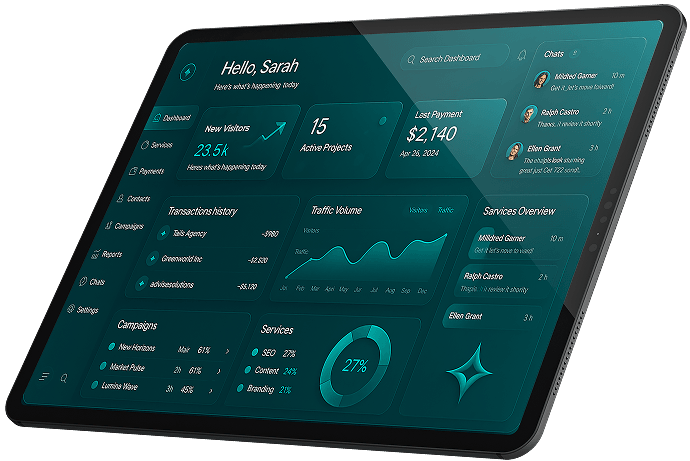
Reporting must stop being a downstream artefact and become a proactive control plane that coordinates finance automation, customer experience management and operational decisioning. When reporting is instrumented as part of the workflow—event-driven feeds, real-time finance postings and CX telemetry—teams can close loops on exceptions, prioritize remediation and quantify cost-to-serve impacts. A unified metrics taxonomy and versioned datasets prevent interpretive drift between finance, operations and CX teams; they convert dashboards into trusted signals rather than disputed outputs.
Operational reporting aligns incentives. By defining SLOs tied to reconciliations, collections, refunds and customer recovery actions, organisations convert passive reports into active guardrails. This requires instrumenting business events (payments, tickets, SLA breaches), mapping them to finance flows and exposing them through deterministic, auditable pipelines. The outcome is faster variance detection, clearer accountability and the ability to convert CX improvements directly into margin and cashflow metrics.
Implementation realities: data, governance and execution
Implementing this shift is not a data-project; it is a systems-and-governance transformation. Core realities include data lineage and observability, near-real-time ingestion of finance events, reconciliation automation and strict metric versioning. Infrastructure must support event routing, durable storage of canonical records, and compute for both batch and streaming reconciliations. Equally important are runbooks, change-safe deployment processes and incident playbooks that keep reporting accurate during schema or upstream-system changes.
Governance must embed metric ownership in the operating model. Assign clear custodians for each KPI, require code-reviewed transformations, and enforce automated reconciliation checks before metrics move to production. Risk vectors to manage include data drift, API latency spikes, privacy constraints and model changes. Execution teams should prioritize a minimal viable control plane: canonical ledger feeds, reconciliation jobs with SLAs, exception queues for ops teams, and an escalation path into finance and legal for systemic anomalies.
Enterprise implications and future readiness
Operationalizing reporting yields immediate and structural benefits: reduced manual effort, faster close cycles, and a measurable improvement in customer recovery economics. Over time it creates a composable capability—reporting-as-control—that supports M&A, new product launches and regulatory reporting with lower marginal cost. The strategic payoff is resilience: enterprises that embed observability and automated reconciliation in their reporting architecture gain predictable margins and the flexibility to reallocate resources toward growth initiatives.
Key Takeaways
Reframe reporting as an operational control plane that links finance automation and CX outcomes.
Build a minimal viable control plane: canonical feeds, automated reconciliations, and runbook-led remediation.
Shift governance to continuous metric ownership, versioning and code-reviewed transformations.
Measure success by reduced cycle time, lower cost-to-serve and improved CX economics.
Techstello Angle
We design reporting as an operational system: unified metrics, event-driven finance feeds, automations and runbook governance. Techstello aligns platform engineering, analytics and operations to create a scalable control plane for continuous optimization.