Executive Summary
Enterprises confront a structural reset in promotions: social networks fragment reach, privacy changes deprecate third‑party signals, and public relations increasingly intersects with conversion. This briefing prescribes a systems-led strategy to stabilize acquisition economics and protect brand momentum. Core actions include unifying campaign intelligence across paid, owned and earned channels; embedding deterministic first‑party measurement and server-side attribution; operationalizing rapid experiment cycles; and defining cross-functional governance with SLAs and scorecards. The practical outcome is reduced CAC volatility, clearer share‑of‑voice metrics, and a platformized acquisition engine that converts visibility into predictable revenue growth.
Techstello Insights
Rebalancing promotions for fragmented attention markets
Marketing and communications leaders are operating in a new landscape where social media algorithms, privacy regulation, and attention scarcity break classic funnel assumptions. Paid social no longer guarantees scale without commensurate signal fidelity; organic reach is constrained and earned media behaves as both trust amplifier and distribution input. Enterprises must treat promotions as a channel ecosystem rather than a set of discrete tactics. That requires rethinking measurement so that creative, PR, and paid investments are assessed against shared commercial outcomes — incremental conversions, qualified pipeline, and durable share‑of‑voice — rather than isolated engagement metrics. The objective is to translate visibility into pipeline predictably, not episodically.
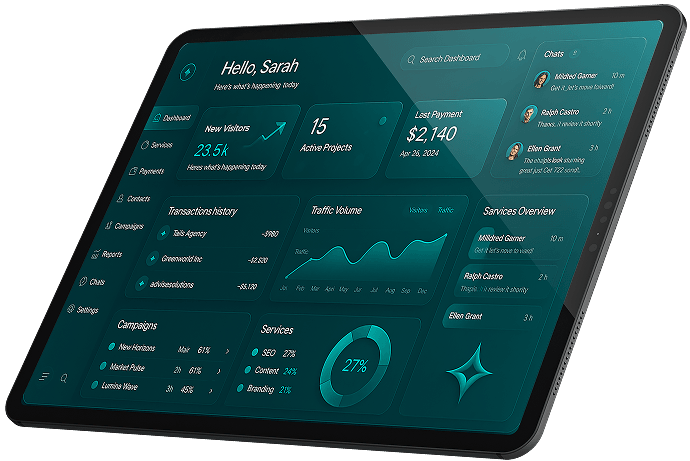
Operationalizing that translation starts with campaign intelligence: a unified data model that maps impressions, earned mentions, creative variants, and first‑party events to conversion outcomes. Social listening and PR analytics provide early indicators of topical momentum; paid execution supplies controlled experiments; owned channels capture deterministic identity. When these streams are instrumented into a single attribution and experimentation layer, leaders can quantify the conversion lift attributable to PR seeding, creative refresh, or audience expansion. The strategic shift is away from channel optimization in isolation and toward orchestration across paid, owned, and earned touchpoints with commercial metrics at the center.
Operational implementation realities
Execution demands a layered technology and governance architecture. At the infrastructure level enterprises should standardize event taxonomies, deploy server‑side collection to mitigate browser restrictions, and centralize identity stitching through a CDP or identity graph. Measurement must combine deterministic linkages with statistically valid lift tests; rely exclusively on modelled attribution and you inherit opaque bias. Practically this means integrating ad platforms, PR monitoring, CRM, and web/mobile telemetry into a pipeline that supports near‑real‑time dashboards and offline reconciliation, while preserving consent and compliance. Platform engineering and martech must collaborate to deliver resilient, scalable pipelines rather than fragile point integrations.
Governance and execution protocols are equally critical. Define SLAs between creative, media, PR, and analytics teams for test velocity, creative turnaround, and reporting cadence. Establish RACI for campaign launches, crisis responses, and attribution disagreements. Invest in a campaign playbook that codifies PR-to-performance tactics — timed release windows, seeded influencer activation, amplification budgets — and pairs them with deterministic tagging so earned activity becomes measurable. Risk management must cover platform policy changes, vendor lock‑in, and auditability of attribution models; a periodic measurement health check should be institutionalized.
Enterprise implications and future readiness
When implemented with discipline, integrated campaign intelligence reduces CAC volatility and converts episodic awareness into repeatable pipeline. Enterprises gain defensible metrics for share‑of‑voice and conversion lift, enabling more confident investment decisions across acquisition channels. Future readiness stems from platform neutrality: measurement frameworks that are portable across vendors, an ownership of first‑party audiences, and a cadence of experimentation that continuously refines creative and channel mix. For leadership, the payoff is strategic: promotional investment becomes an engine for predictable growth, public relations becomes a measurable acquisition lever, and the organization builds a durable advantage in attention arbitrage.
Key Takeaways
- Promotions must be managed as an integrated channel ecosystem linking paid, owned, and earned activity to commercial outcomes.
- Invest in deterministic first‑party measurement, server‑side instrumentation, and lift testing to reduce CAC volatility.
- Codify PR‑to‑performance playbooks and cross‑functional SLAs to accelerate experiment velocity and attribution clarity.
- Prioritize platform‑neutral measurement and ownership of audiences to sustain long‑term acquisition scalability.
Techstello Angle
Techstello frames promotions as systems problems. We align campaign orchestration, first‑party measurement, and PR-to-performance playbooks, then operationalize through governance, platform engineering, and repeatable experimentation to scale predictable acquisition.