Executive Summary
RPO is evolving from vendor execution to an enterprise operational capability that must be instrumented by reporting and business intelligence. Senior leaders face pressure to convert fragmented hiring activities into predictable, measurable workforce delivery. Achieving this requires unified data models, rigorous metrics governance, integrated telemetry across ATS and HRIS platforms, and operational playbooks that tie analytics to hiring cadence and quality. Successful programs use event-driven pipelines, near real-time dashboards and automated exception workflows to reduce cycle time and improve decision velocity. Commercial returns appear through lower vacancy costs, better role fit and repeatable scaling across regions. The strategic shift demands treating RPO as a systems design challenge: align architecture, governance and operations to transform recruitment from an expense to a measurable capability that supports enterprise growth.
Techstello Insights
Main strategic section heading
Recruitment process outsourcing is no longer a plug-in vendor service. Market volatility, talent competition and tighter cost controls force enterprises to view RPO as an operational system that must deliver measurable outcomes. The strategic imperative is to reframe hiring as a telemetry-driven process: capture events across applicant tracking systems, assessment platforms and HRIS; normalize those signals into a unified data model; and expose metrics that reflect both speed and quality. Leaders must prioritize a limited set of enterprise KPIs—time-to-fill, quality-of-hire, offer-to-accept rate, and cost-per-hire—so analytics drive consistent decisions across regions and functions.
This reframing affects commercial positioning. When analytics are embedded, RPO vendors compete on velocity, predictability and the ability to scale talent programs. Enterprises extract value by converting hiring variability into predictable capacity planning and by reducing vacancy drag on revenue. The strategic design requires explicit SLAs tied to measurable telemetry, contractual alignment on data ownership, and an operating model that treats insights as an asset to be invested in and iterated.
Operational implementation realities
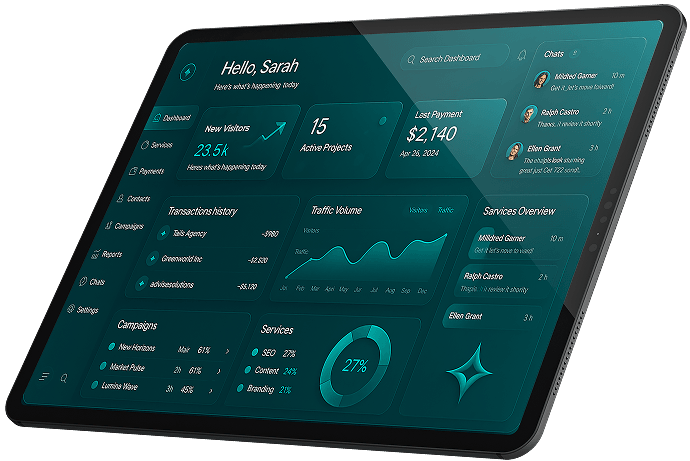
Operationalizing reporting and BI for RPO demands an engineered approach. Start with data lineage and a master data model that reconciles requisition, candidate, assessment and onboarding records. Implement event-driven ingestion from ATS and HRIS systems to maintain near real-time visibility. Build dashboards that reflect operational cadence and surface exceptions; pair these with automated workflows that route issues—such as stale requisitions or bottlenecked interviews—to the right operational owner. Without role-based access, data masking and clear ownership, dashboards become noise rather than leverage.
Governance and execution risk are frequently underestimated. Effective programs require a cross-functional governance board with HR, procurement, IT and vendor representation. Define metric definitions, change controls, and release cadence for analytics. Secure pipelines with encryption, catalog data artifacts for auditability, and apply MDM to reconcile role and location hierarchies. Operational scale also depends on orchestration: CI/CD for analytics artifacts, templated playbooks for common hiring scenarios, and a feedback loop that translates dashboard signals into process updates and training for recruiters.
Enterprise implications and future readiness
When implemented correctly, RPO reporting and BI shift recruitment from episodic activity to a repeatable enterprise capability. This yields measurable commercial outcomes: shorter vacancy cycles, higher hiring velocity, and improved quality alignment with role-level competency profiles. More broadly, the capability enables scenario planning—modeling hiring velocity under different demand scenarios—and informs workforce investment decisions. Architecturally, mature programs build toward composable talent services that can be adopted across business units with predictable onboarding and minimal bespoke integration.
Future-ready RPO operations emphasize continuous optimization. Adopt hypothesis-driven experiments to test sourcing channels and interview flows. Use predictive signals to prioritize roles and reallocate recruiter capacity. Embed operational metrics into finance and planning cycles so talent supply becomes a variable in commercial forecasting. Success requires sustained investment in data ops, governance and vendor orchestration—capabilities that convert reporting and BI into competitive advantage rather than compliance artifacts.
Key Takeaways
Treat RPO as a systems design problem: unify data, define enterprise KPIs, and instrument workflows.
Operational value requires event-driven pipelines, near real-time dashboards and automated exception handling.
Governance must reconcile metric definitions, data ownership and vendor SLAs to avoid analytical drift.
Scaling RPO delivers commercial returns through reduced vacancy cost, improved fit and predictable workforce capacity.
Techstello Angle
Techstello aligns systems thinking with operational execution: we design unified telemetry, deploy BI pipelines, and codify governance and playbooks so RPO moves from transactional outsourcing to a scalable, measurable enterprise capability.